
Basketball at the 1980 Summer Olympics
Tenth Olympic basketball event, held in Moscow amid a boycott.
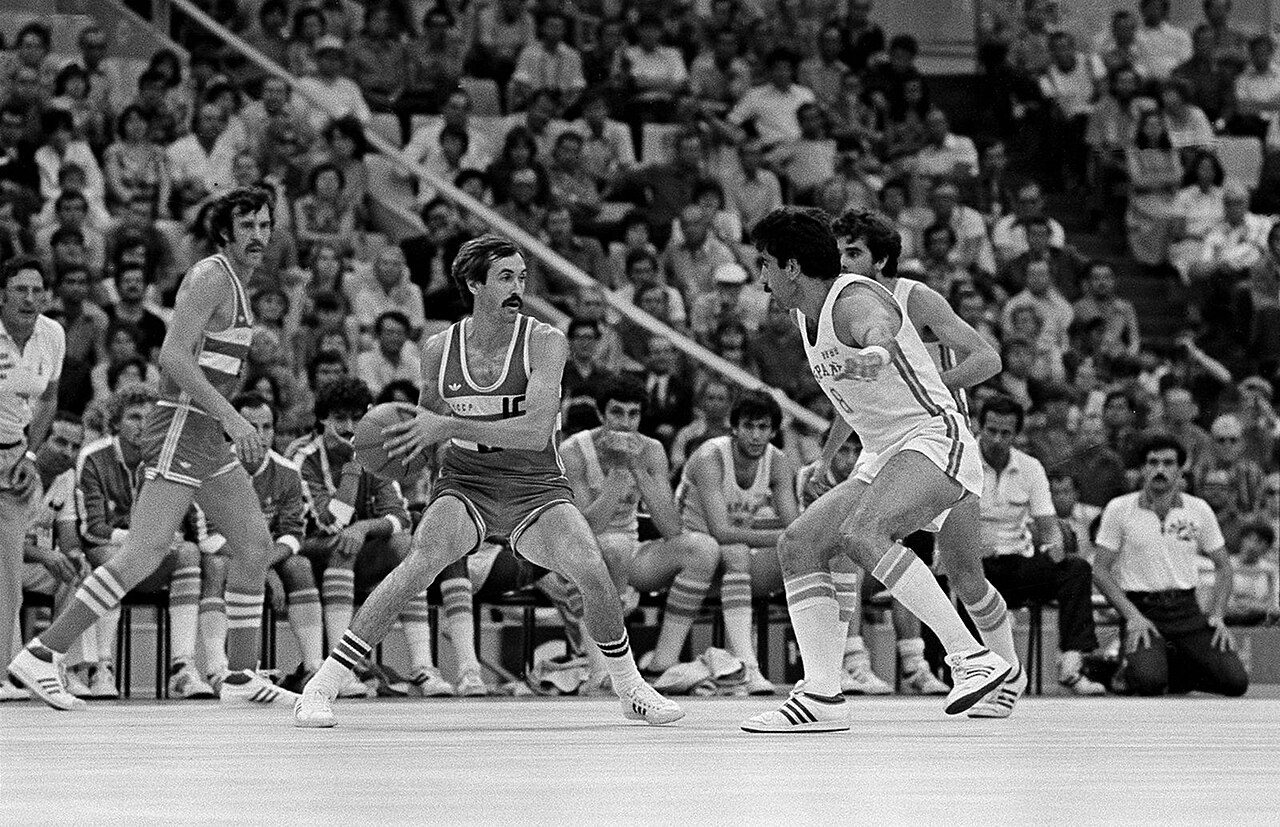
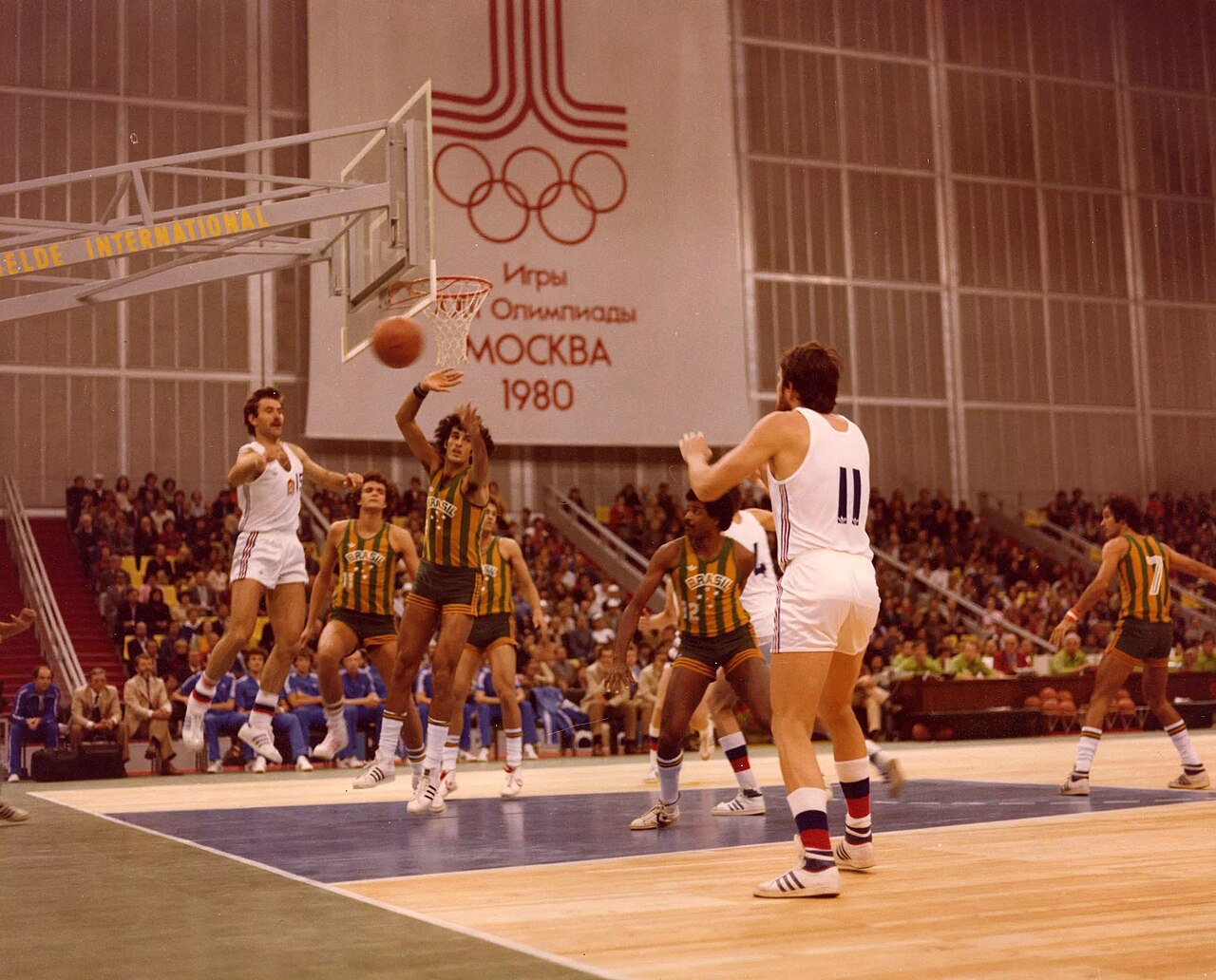
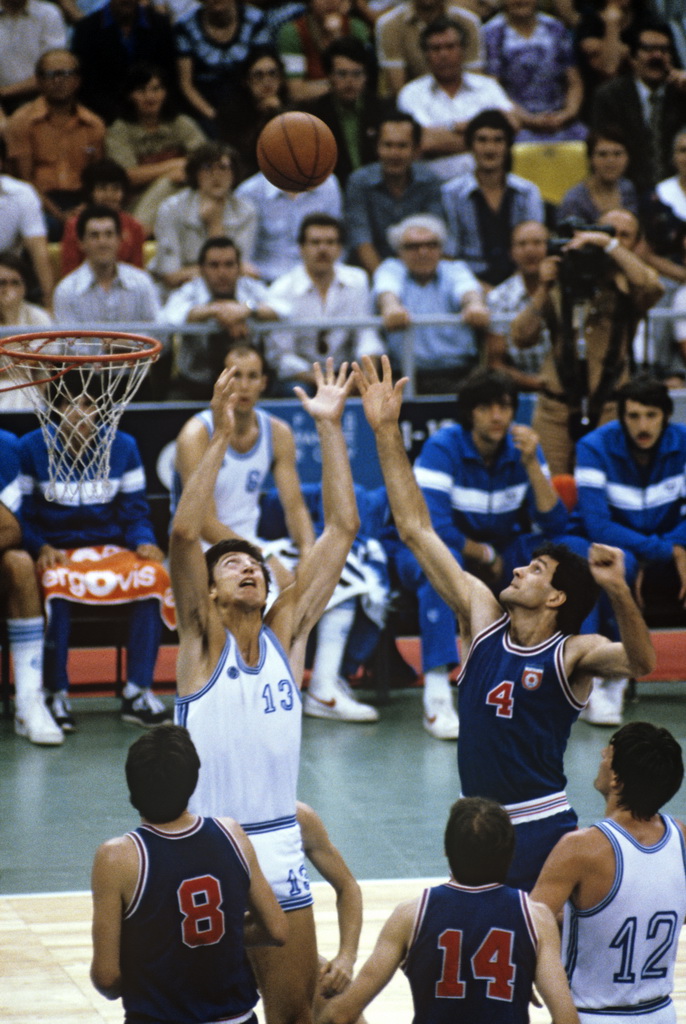
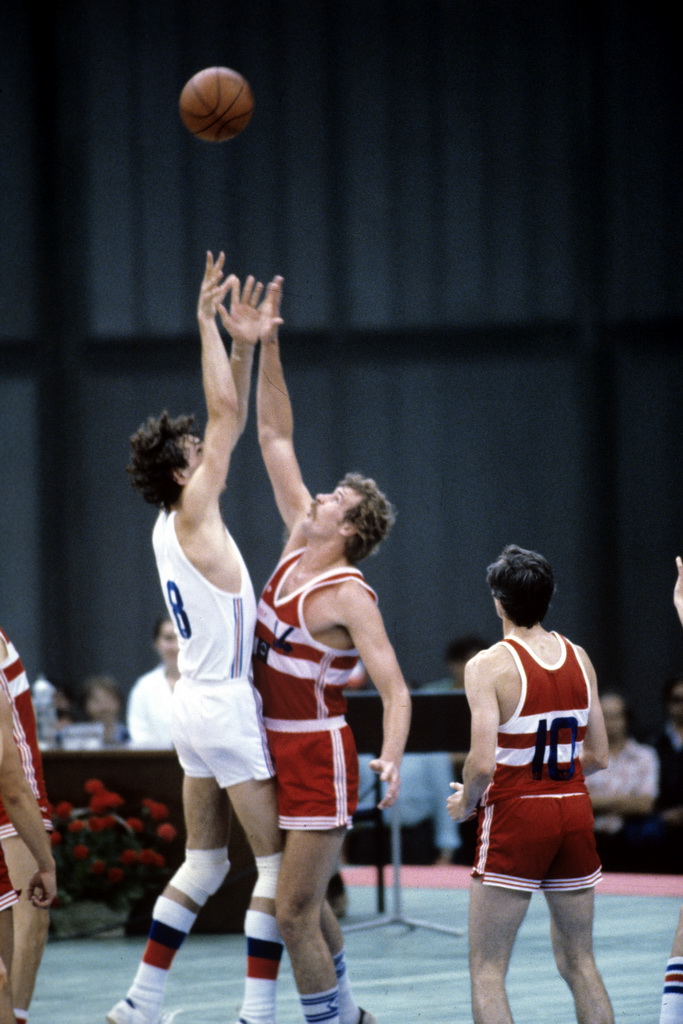
The 1980 Summer Olympics marked the tenth time basketball was an official medal event. The competition ran from July 20 to July 30, with games held at Moscow’s Olympiiski Indoor Stadium and CSKA Sports Palace. The men’s finals took place on July 30 at the Olympiiski Indoor Stadium.
Because of the American-led boycott, the United States and several other countries pulled out of the tournament. This was only the second occasion (the first being the disputed 1972 Games) that the U.S. men’s team failed to take gold. Instead, Yugoslavia won the men’s tournament, and the Soviet Union claimed gold in the women’s competition.
Each National Olympic Committee could enter one men’s team of 12 players and one women’s team of 12 players. Automatic berths went to the host nation for both events, the 1978 FIBA World Championship winner, and the 1976 Olympic gold medalists. The remaining men’s spots were filled through continental qualifiers; the women’s spots were decided at a tournament held months earlier in Varna, Bulgaria.
For the men, three round-robin groups of four teams were formed. The top two from each group advanced to a final round, while the others went to a classification round. Both the final and classification groups were another round-robin of six teams, with results from preliminary matches between teams in the same group carried over. The top two in the final round played for gold, and the third and fourth for bronze. Final standings beyond fourth place were determined by each team’s position in its respective group.
The women’s tournament used a single round-robin group of six teams. The top two faced off for gold, and the third and fourth for bronze. The remaining two teams finished in their group rank. Tie-breaking criteria were head-to-head results, then goal average (not goal difference) between tied teams, then goal average against all teams in the group.
In the men’s preliminary round, host Soviet Union and world champions Yugoslavia advanced undefeated. Group C was tightly contested among Italy, Cuba, and Australia, with the third tiebreaker deciding that Italy and Cuba would move on.
The classification round carried over results from Poland vs. Senegal, Australia vs. Sweden, and Czechoslovakia vs. India. In the semi-final round, the host nation, despite an undefeated preliminary record, lost to Yugoslavia and especially Italy—the latter re
- Event
- Basketball at the 1980 Summer Olympics
- Dates
- July 20–30, 1980
- Venues
- Olympiiski Indoor Stadium, CSKA Sports Palace (Moscow)
- Men's Gold
- Yugoslavia
- Women's Gold
- Soviet Union
- Men's Silver
- Italy
- Women's Silver
- Bulgaria
Lore & Background
The tournament featured men's and women's competitions. For the men, three round-robin groups of four teams were formed, with the top two from each advancing to a final round. Hosts Soviet Union and world champions Yugoslavia advanced undefeated from the preliminary round. In Group C, qualification was closely contested between Italy, Cuba, and Australia, decided by a third tiebreaker in favor of Italy and Cuba. The Soviet Union failed to compete for gold after losses to Yugoslavia and Italy, with the Italy result serving as tiebreaker. Yugoslavia earned their first gold medal in men's basketball, defeating Italy in the final. The Soviet Union won the bronze against Spain.
Reader's Guide
The 1980 Olympic basketball tournament is significant as the second time the United States men's team did not win gold, following the 1972 controversy. The American-led boycott reshaped the competition, allowing Yugoslavia to claim its first men's gold and the Soviet Union to win the women's gold. The event highlighted the strength of European teams, with Italy taking silver and the Soviet Union bronze in the men's tournament. The women's tournament featured a single round-robin group, with the host nation finishing undefeated and winning gold against Bulgaria. Yugoslavia won the women's bronze against Hungary. The tournament's format and tie-breaking criteria (head-to-head results, goal average) influenced the outcomes, particularly in Group C. This edition remains a notable chapter in Olympic basketball history due to the geopolitical context and the shift in medal winners.
Did You Know?
- The United States men's team did not win gold for the second time in Olympic basketball history, after a controversy in 1972.
- Yugoslavia earned their first gold medal in men's basketball at this Olympic Games.
- The women's tournament was decided in a single round-robin group of six teams.
- The Soviet Union women's team finished the group phase undefeated and won the gold medal against Bulgaria.
The Boycott That Reshaped the Podium
The 1980 Moscow Games will always be remembered through the lens of the political boycott that stripped the tournament of its most dominant participant. For the first time since basketball's Olympic debut in 1936, the United States did not send a men's team to the Games. That absence fundamentally altered the competitive landscape. The Americans had claimed seven consecutive gold medals from 1936 through 1968 without dropping a single game, making their absence a seismic shift. In their stead, Yugoslavia surged to the top of the medal table, becoming the third nation ever to capture the Olympic basketball title. The Yugoslavs dispatched the Soviet Union in the semifinal—a rematch of their 1976 semifinal victory over the same opponents—before defeating Italy in the gold medal game. Meanwhile, the Soviet-led boycott of the 1984 Los Angeles Games would later mirror this disruption, with Spain stepping in as the runner-up when the Americans reclaimed the crown. The 1980 result stands as a testament to how geopolitical forces can rewrite sporting history overnight.
Yugoslavia's Third-Place in History
Yugoslavia's 1980 gold medal remains one of the most remarkable achievements in Olympic basketball history. The nation became only the third country ever to win the men's tournament, joining the United States and the Soviet Union on the all-time winners' list. Their path to the title was forged in two decisive victories: first, a semifinal triumph over the Soviet Union that echoed their 1976 semifinal win over the same rivals, and then a hard-fought final against Italy. What makes the accomplishment even more striking is the era in which it occurred. The 1980 tournament was still governed by strict amateur rules, meaning Yugoslavia could not simply import its most star-studded professionals. Instead, the team relied on players who qualified under FIBA's amateur classifications—athletes who earned allowances rather than traditional wages. Yugoslavia, which no longer exists as a political entity, carries this gold as a permanent part of its sporting heritage. The fact that the nation is no longer in existence makes the 1980 title an even more poignant chapter, preserved only in the records of FIBA and the IOC.
Women's Court: The Soviets Hold the Line
Women's basketball had only been an Olympic medal sport since 1976, when the Soviet Union stormed to the inaugural title by winning five straight games. By the time the 1980 Moscow Games arrived, the sport was still in its formative Olympic years, and the tournament retained the compact six-team round-robin format that had been used in both 1976 and 1980. The political landscape of 1980 shaped the women's competition just as it did the men's. The United States, which would go on to become the most dominant force in Olympic women's basketball—eventually winning ten titles out of twelve tournaments they entered, including eight consecutive from 1996 to 2024—was absent from Moscow due to the boycott. This left the Soviet Union, the defending champions, to defend their crown in a field that lacked the Americans' competitive pressure. The Soviets successfully held onto their title, extending their early Olympic dominance in a format that would not expand to eight teams until 1988. The 1980 women's tournament thus represents a brief window in which the sport's Olympic story was told without its most prolific future champion.
The Amateur System at Its Breaking Point
The 1980 Olympic basketball tournament was played under a set of amateur rules that were already showing deep cracks. The United States, barred from fielding professional NBA players, sent collegiate athletes to represent the country, a practice that had defined American Olympic basketball since the sport's 1936 debut on outdoor tennis courts in Berlin. Across the Iron Curtain, the Soviet Union and other Eastern Bloc nations operated a fundamentally different model. Their athletes were nominally listed in the military, yet in reality they were paid by the state to train full-time. FIBA classified such players as "amateurs" because they earned allowances rather than traditional wages, a technicality that placed self-financed Western competitors at a structural disadvantage. This tension between ideological amateurism and state-sponsored professionalism would eventually force a reckoning. In April 1989, under the leadership of FIBA Secretary General Borislav Stanković, the federation approved a rule permitting NBA players to compete in international tournaments, including the Olympics. The 1980 Games thus sit at the very end of an era—one in which the definition of "amateur" was stretched to its limits before the professional era reshaped the sport entirely.
Gallery
More in Basketball at the Summer Olympics 1-24
Spotted an error? Know more?
This is a living reference — every entry is fact-audited, and reader corrections feed straight into our audit queue. Suggest an edit · See this site's audit record