
Basketball at the 1948 Summer Olympics
Second Olympic basketball event, held indoors at Harringay Arena.

Wikipedia / Wikimedia Commons
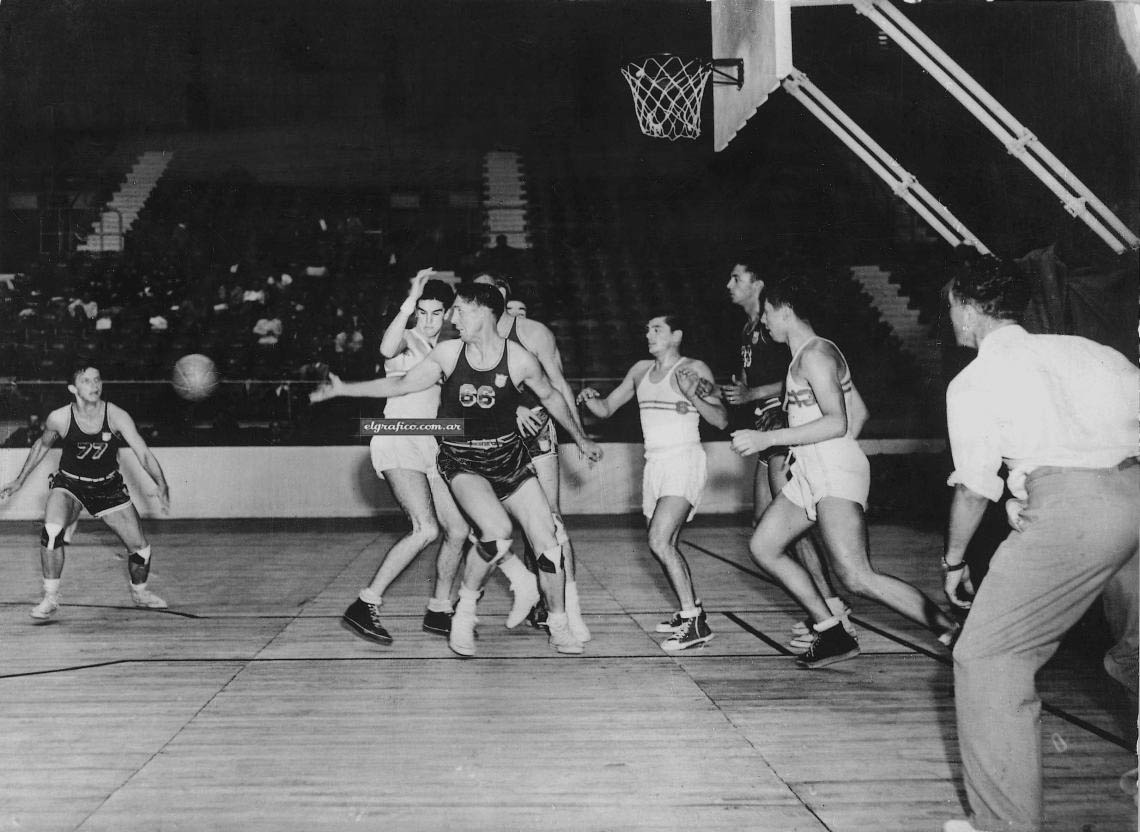
The 1948 Summer Olympics marked the second time basketball was an official Olympic medal sport. Twenty-three nations competed. After the 1936 final was played in terrible weather, the tournament moved indoors to Harringay Arena.
In the preliminary round, the teams were split into four groups: three groups of six and one group of five. Each group played a single round-robin. If teams were tied, the ratio of points scored to points allowed broke the tie. The top two teams from each group advanced to the final round; the remaining four teams entered classification playoffs.
The group stage results are listed below.
Group A: Uruguay 69–17 Great Britain; Brazil 45–41 Hungary; Canada 55–37 Italy; Brazil 36–32 Uruguay; Canada 44–24 Great Britain; Hungary 32–19 Italy; Brazil 76–11 Great Britain; Hungary 37–36 Canada; Uruguay 46–34 Italy; Italy 49–28 Great Britain; Uruguay 49–31 Hungary; Brazil 57–35 Canada; Hungary 60–23 Great Britain; Brazil 47–31 Italy; Canada 52–50 Uruguay.
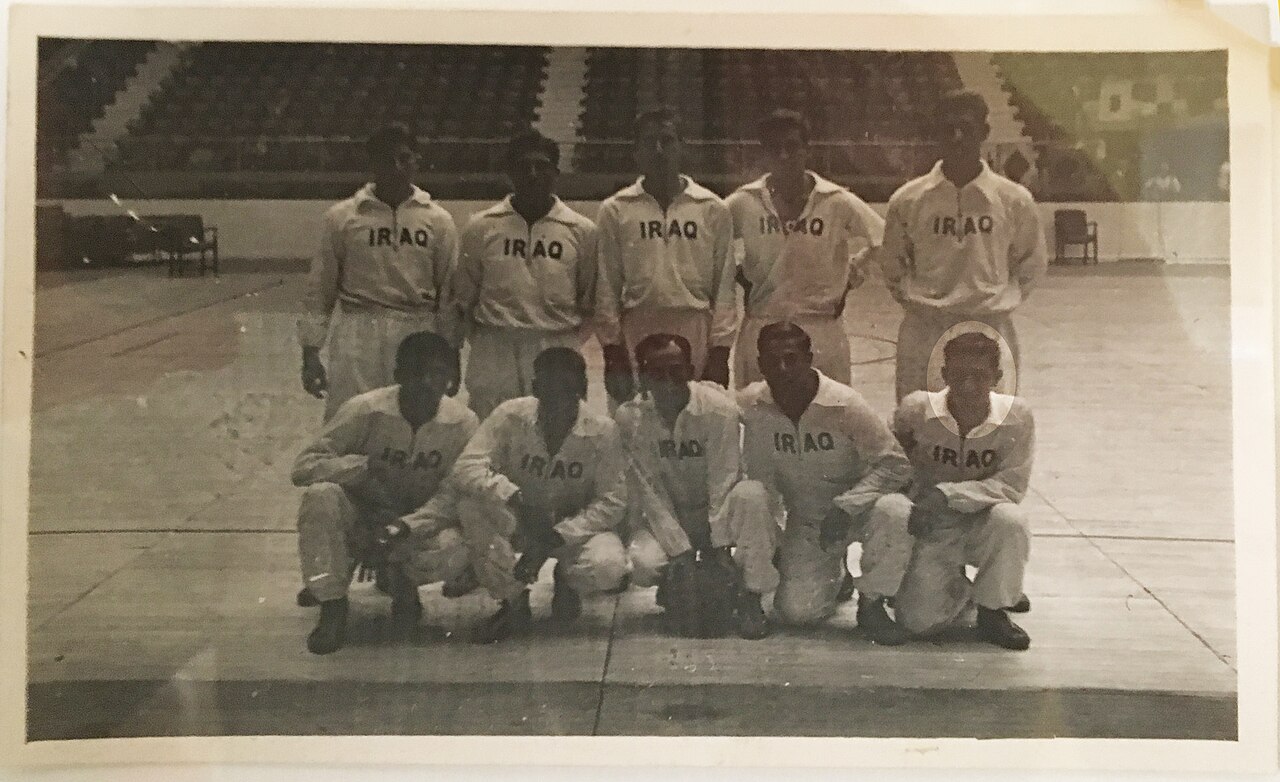
Group B: Philippines 102–30 Iraq; Korea 29–27 Belgium; Chile 44–39 China; Chile 100–18 Iraq; Philippines 35–33 Korea; China 36–34 Belgium; Chile 68–39 Philippines; Belgium 98–20 Iraq; China 49–48 Korea; Belgium 38–36 Chile; Korea 120–20 Iraq; Philippines 51–32 China; Belgium 35–34 Philippines; China 125–25 Iraq; Korea 28–21 Chile.
Group C: United States 86–21 Switzerland; Czechoslovakia 38–30 Peru; Argentina 57–38 Egypt; Peru 52–27 Egypt; Argentina 49–23 Switzerland; United States 53–28 Czechoslovakia; Peru 49–19 Switzerland; United States 59–57 Argentina; Czechoslovakia 52–38 Egypt; United States 66–28 Egypt; Czechoslovakia 54–28 Switzerland; Argentina 42–34 Peru; Egypt 31–29 Switzerland; United States 61–33 Peru; Czechoslovakia 45–41 Argentina.
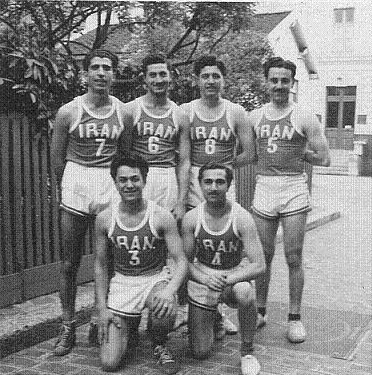
Group D: France 62–30 Iran; Mexico 39–31 Cuba; Mexico 71–9 Ireland; France 37–31 Cuba; Mexico 56–42 France; Iran 49–22 Ireland; Mexico 68–27 Iran; Cuba 88–25 Ireland; Cuba 63–30 Iran; France 73–14 Ireland.
In the classification rounds, Egypt received a bye to the classification semifinals because the total number of teams was not a multiple of two. Ireland was deemed to have finished last, due to its loss to Switzerland and a bye earned from Iraq. Hungary forfeited all of its classification matches, and wins were awarded to their opponents, marked by asterisks.
The final round included quarterfinals, 5th–8th place semifinals, semifinals, and f
- Edition
- 1948 Summer Olympics
- Sport
- Basketball
- Appearance
- Second official Olympic medal event
- Venue
- Harringay Arena (indoor)
- Nations
- 23
- Players
- 298 (minimum, per official report)
- Format
- Preliminary round-robin groups, then knockout final round
Lore & Background
The tournament began with a preliminary round where teams were divided into four groups: three groups of six squads and one group of five squads. Each group played a single round-robin format, with ties broken by the ratio of points scored to points allowed. The top two teams from each group advanced to the final round, while the remaining teams entered classification playoffs.
Reader's Guide
The 1948 Olympic basketball tournament marked the sport's return to indoor competition after the rain-soaked 1936 final. The event featured 23 nations and 298 players, with group play determining the medal contenders. Notable results include the United States dominating Group C, while Group D saw France, Mexico, and Cuba advance. The classification rounds included a bye for Egypt due to the odd number of teams, and Hungary forfeited all their classification matches, with wins awarded to opponents. The tournament's structure—round-robin groups followed by knockout rounds—became a template for future Olympic basketball competitions.
Did You Know?
- A total of 23 nations entered the competition, the second Olympic basketball event.
- The tournament was held indoors at Harringay Arena after weather issues in 1936.
- Hungary forfeited all their classification round matches, giving wins to opponents.
- The official report lists 298 players who participated in at least one game.
The Indoor Debut: A New Stage for Olympic Basketball
The 1948 London Games marked a pivotal shift in how Olympic basketball was staged. When the sport first appeared as a medal event in Berlin in 1936, the tournament had been played on outdoor tennis courts, an arrangement born of the era's available facilities. By 1948, the competition moved under a roof for the first time, signaling a maturation of the sport's presentation on the world's biggest stage. This indoor setting would become the standard for all subsequent Olympic basketball tournaments. The shift was not merely cosmetic; it reflected the growing organizational infrastructure behind the game, which had spread from its 1891 invention by James Naismith in Springfield, Massachusetts, to a global audience through the efforts of the YMCA and the International Basketball Federation, established in Geneva in 1932. By the time the 1948 tournament rolled around, basketball had already established itself as a consistent men's Olympic sport since 1936, and the indoor venue gave the competition a more controlled, spectator-friendly environment that would define the sport's Olympic identity going forward.
The American Invincibility Streak
The 1948 tournament was one link in a remarkable chain: the United States men's team captured gold at every Olympic basketball competition from 1936 through 1968, a run of seven consecutive titles in which they did not lose a single game. That streak, which included the 1948 Games, stands as one of the most dominant runs in Olympic sports history. The Americans achieved this dominance under a strict amateur framework that barred them from fielding players from the professional National Basketball Association. Instead, they dispatched college athletes, while rival nations sent their finest players who, under FIBA's classification, qualified as amateurs because they received allowances rather than wages. This rule created an uneven competitive landscape that nonetheless produced a period of total American supremacy. The U.S. men's record of 17 gold medals out of 20 tournaments they entered underscores just how exceptional their Olympic basketball legacy has been, with 1948 sitting squarely in the middle of that golden era.
The Amateur World and FIBA's Governance
The 1948 Olympic basketball tournament operated within a governance structure that would seem almost unrecognizable to modern fans. FIBA, the International Basketball Federation, had been organized in Geneva, Switzerland, in 1932, and by the late 1940s it was the body responsible for sanctioning the Olympic competition alongside the International Olympic Committee. The sport's global spread owed much to the Young Men's Christian Association, which carried the game from its 1891 invention by James Naismith in Springfield, Massachusetts, to countries around the world. The first Olympic tournament in 1936 drew as many as 21 teams, a testament to how quickly the game had taken hold internationally. Under the amateur rules in force during 1948, every competitor was required to be a non-professional, a constraint that shaped team selection for decades. It was not until April 1989, when FIBA's leadership under Secretary General Borislav Stanković approved the participation of NBA players, that the professional era truly began, fundamentally altering the competitive landscape that 1948's amateur framework had defined.
Breaking the Streak and the Broader Legacy
The American invincibility that defined the 1948 tournament and its predecessors would eventually be broken. In 1972, the Soviet Union edged the United States by a single point in a gold medal game that remains one of the most controversial in Olympic basketball history. That upset shattered the seven-title streak that had included 1948 and marked the beginning of a more competitive era. The Soviet Union would claim a second gold in 1988, while Yugoslavia added its own title in 1980 during the American boycott. The competitive balance shifted further after 1989, when FIBA opened the door to NBA players, culminating in the 1992 Dream Team that averaged a 44-point winning margin per game. Since then, the United States has reclaimed dominance, winning four consecutive golds from 2016 through 2020, though Argentina's 2004 triumph proved that other nations could still dethrone them. The 1948 Games, with their indoor debut and American supremacy, remain a foundational chapter in this long, evolving Olympic basketball narrative.
Gallery

More in Basketball at the Summer Olympics 1-24
Spotted an error? Know more?
This is a living reference — every entry is fact-audited, and reader corrections feed straight into our audit queue. Suggest an edit · See this site's audit record