
Basketball at the 1956 Summer Olympics
Fifteen nations competed in 56 games at the Royal Exhibition Building.

Wikipedia / Wikimedia Commons
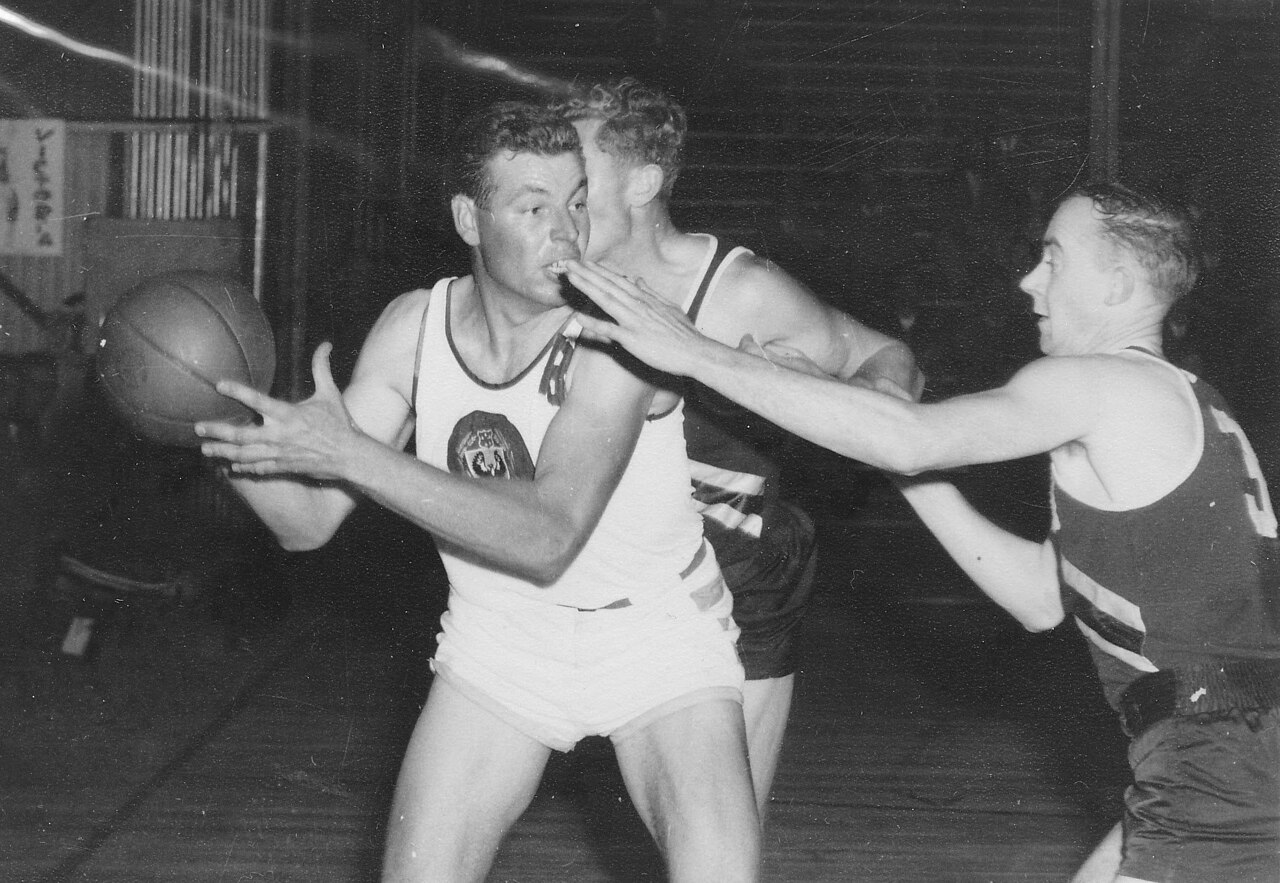
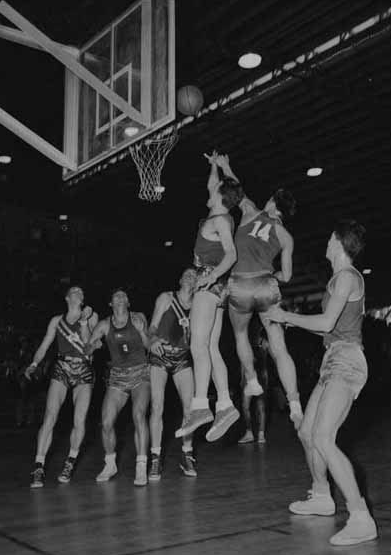
The 1956 Summer Olympics marked the fourth time basketball was an official medal sport. The tournament featured fifteen nations, a notably small field for the event, with 174 athletes competing in 56 games held at the Royal Exhibition Building.
The competition began with a preliminary round split into four pools. Three pools contained four teams each, while the fourth had only three. Every team played each other once within its pool. The top two teams from each pool advanced to the quarterfinals, where they were again divided into two pools of four. Once more, teams played every other team in their pool. The top two from each quarterfinal pool moved on to the semifinals, while the bottom two entered a separate pool to determine fifth through eighth place. Teams eliminated earlier also played consolation matches using the same pool structure, competing for ninth through fifteenth place.
- edition
- 1956 Summer Olympics
- sport
- Basketball
- appearance
- Fourth official Olympic medal event
- nations
- 15
- participants
- 174
- games_played
- 56
- venue
- Royal Exhibition Building
Lore & Background
The tournament featured an unusually low number of fifteen nations, divided into four pools: three pools of four teams and one pool of three. Each team played every other team in its pool once. The top two from each pool advanced to the quarterfinals, where they were again split into pools of four, with the top two advancing to the semifinals and the bottom two entering a pool for 5th through 8th places. Eliminated teams played consolation matches for 9th through 15th places, following the same structure as the quarterfinals and finals.
Reader's Guide
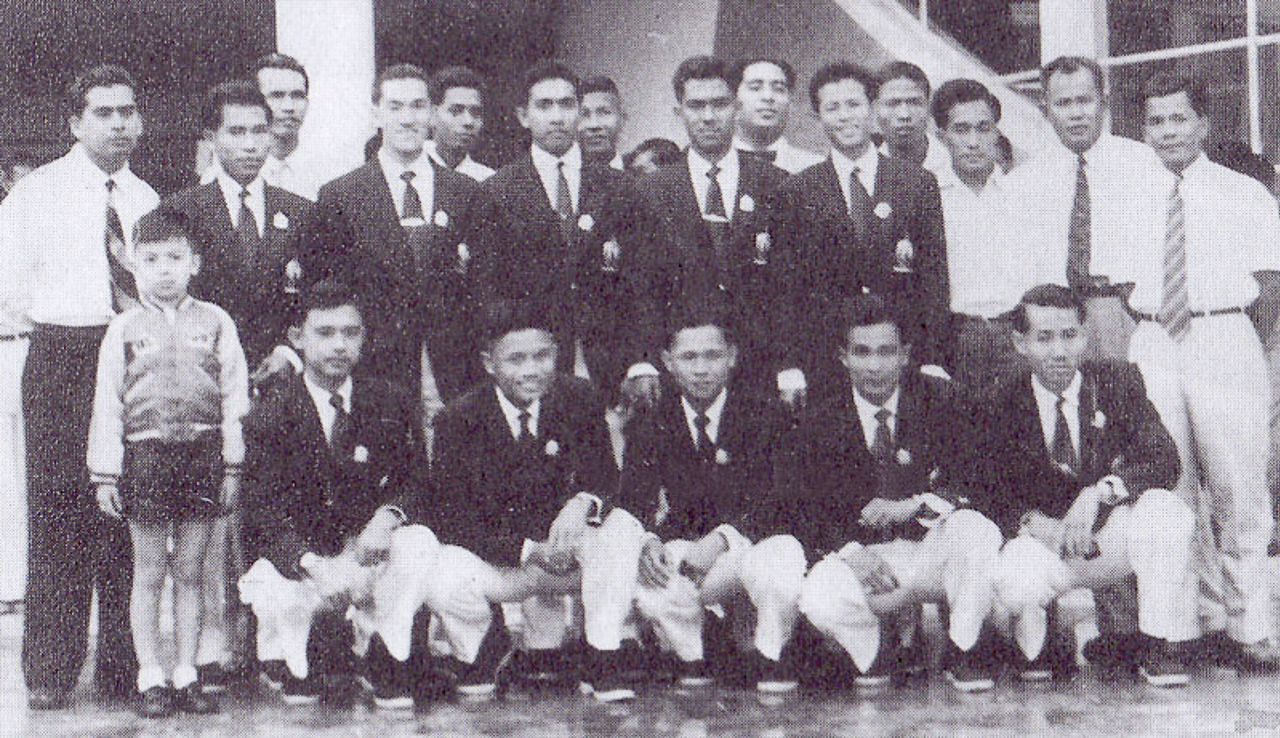
The 1956 Summer Olympics basketball tournament marked the fourth time the sport was contested as an official medal event. The low number of participating nations—fifteen—reflected the era's geopolitical landscape and logistical challenges. The tournament's structure, with preliminary pools, quarterfinal pools, and consolation brackets for all eliminated teams, ensured that every nation played multiple games. The final placings noted Thailand as the last-place team due to their loss to the Koreans. This edition contributed to the sport's growing international profile, held at the Royal Exhibition Building, and set a precedent for future Olympic basketball tournaments.
Did You Know?
- Fifteen nations competed, an unusually low number for the basketball tournament.
- A total of 56 games were played at the Royal Exhibition Building.
- Thailand was named as the final placers because of their loss to the Koreans.
- The top two teams from each preliminary pool advanced to the quarterfinals.
Origins and the Road to the Olympics
Basketball was created in 1891 by James Naismith in Springfield, Massachusetts, and within a few decades it had become a widely popular indoor sport across the United States. The game's reach extended far beyond American borders, aided significantly by the Young Men's Christian Association, which helped introduce the sport to numerous countries around the world. This international growth led to the founding of the International Basketball Federation in Geneva, Switzerland, in 1932. Basketball first appeared at the Olympics as an unofficial demonstration event in 1904 and again in 1924 before earning full medal sport status. The inaugural official Olympic tournament took place at the 1936 Berlin Games, where as many as 21 teams competed. Notably, the event was staged on outdoor tennis courts, and the medals were personally presented by Dr. Naismith himself. The tournament did not move indoors until the 1948 Games, marking a gradual evolution of the sport's Olympic presentation.
The American Amateur Hegemony
From 1936 through 1968, the United States men's basketball team captured every Olympic gold medal, winning seven consecutive titles without dropping a single game. This remarkable run was achieved under strict amateur rules that barred professional National Basketball Association players from competing. Instead, American teams were composed of college athletes, a system championed in part by Kansas Jayhawks coach Phog Allen, who helped organize the very first Olympic tournament. Meanwhile, competitors from other nations could field their best available players, since some were classified as amateurs by FIBA because they received allowances rather than wages. The United States men's teams have since won 17 of the 20 tournaments in which they have participated, cementing their status as the most successful nation in Olympic basketball history by a wide margin.
Cold War Tensions and the End of a Streak
The unbroken American winning streak finally snapped in 1972, when the Soviet Union edged the United States by a single point in a gold medal game that remains one of the most controversial in Olympic basketball history. The underlying tension stemmed from the Eastern Bloc's practice of fielding state-sponsored full-time amateur athletes—players nominally listed in the military but in reality paid by the government to train full-time, giving them a structural advantage over self-financed Western amateurs. The rivalry intensified through the 1980s, shaped by mutual boycotts: Yugoslavia claimed the 1980 title in the absence of the Americans, while the U.S. reclaimed gold in 1984 with the Soviets staying home. The Soviets won their second gold in 1988, defeating the Americans in the semifinal and the Yugoslavs in the final.
The Professional Era and Modern Evolution
In April 1989, FIBA approved a rule permitting NBA players to compete in international tournaments, including the Olympics. The impact was immediate and staggering: at the 1992 Barcelona Games, the American Dream Team won gold with an average margin of 44 points per game and never called a timeout. The United States repeated its victory in 1996 and 2000, though with less overwhelming dominance. Argentina broke through in 2004, defeating the Americans in the semifinals and Italy in the final to become the fourth nation to claim the Olympic title. The U.S. has since reasserted its supremacy, winning gold in 2008, 2012, 2016, and 2020—four consecutive titles. Women's basketball debuted in 1976, and 3x3 basketball was added as an official Olympic sport starting with the 2020 Tokyo Games.
Gallery
More in Basketball at the Summer Olympics 1-24
Spotted an error? Know more?
This is a living reference — every entry is fact-audited, and reader corrections feed straight into our audit queue. Suggest an edit · See this site's audit record