
Basketball at the 1968 Summer Olympics
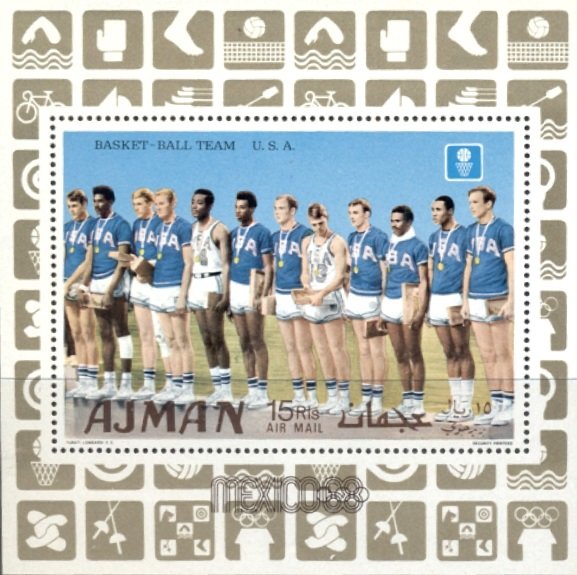
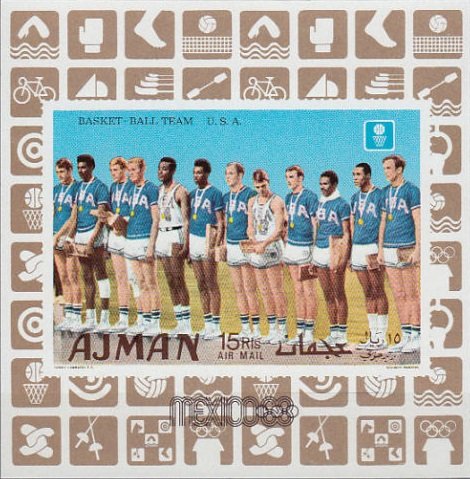
Seventh Olympic basketball gold for the United States.

Wikipedia / Wikimedia Commons
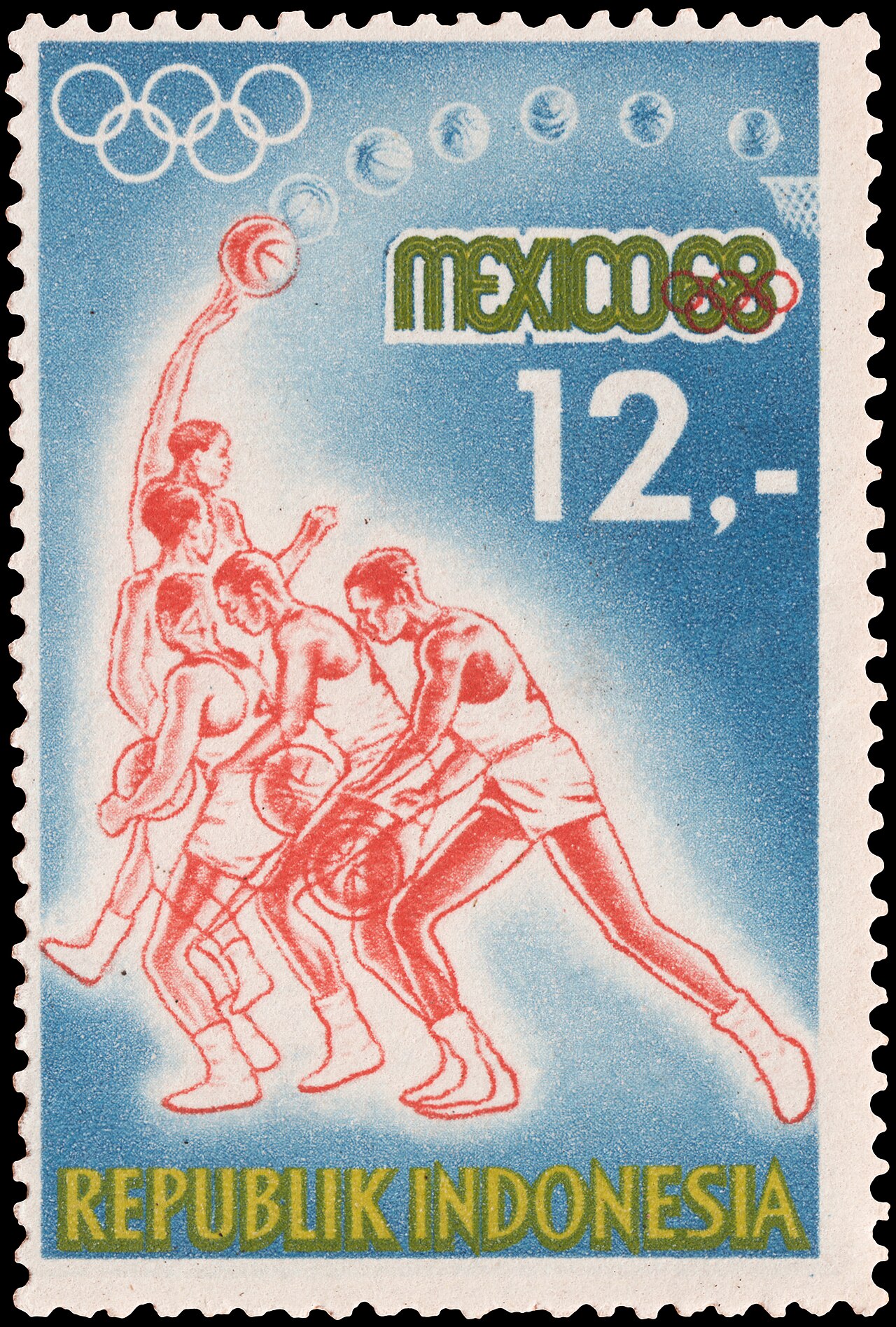
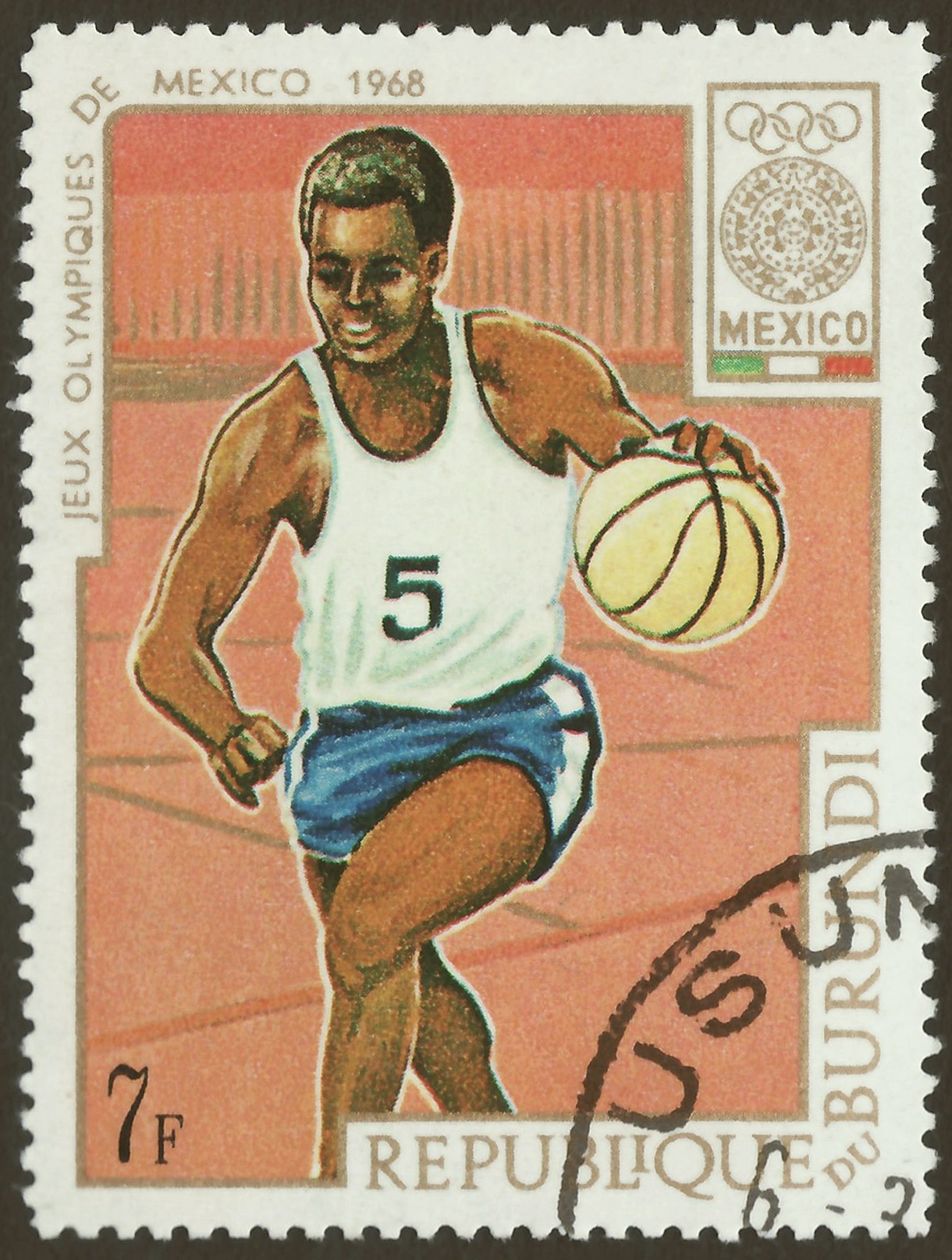
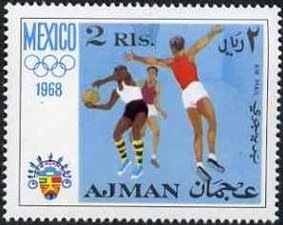
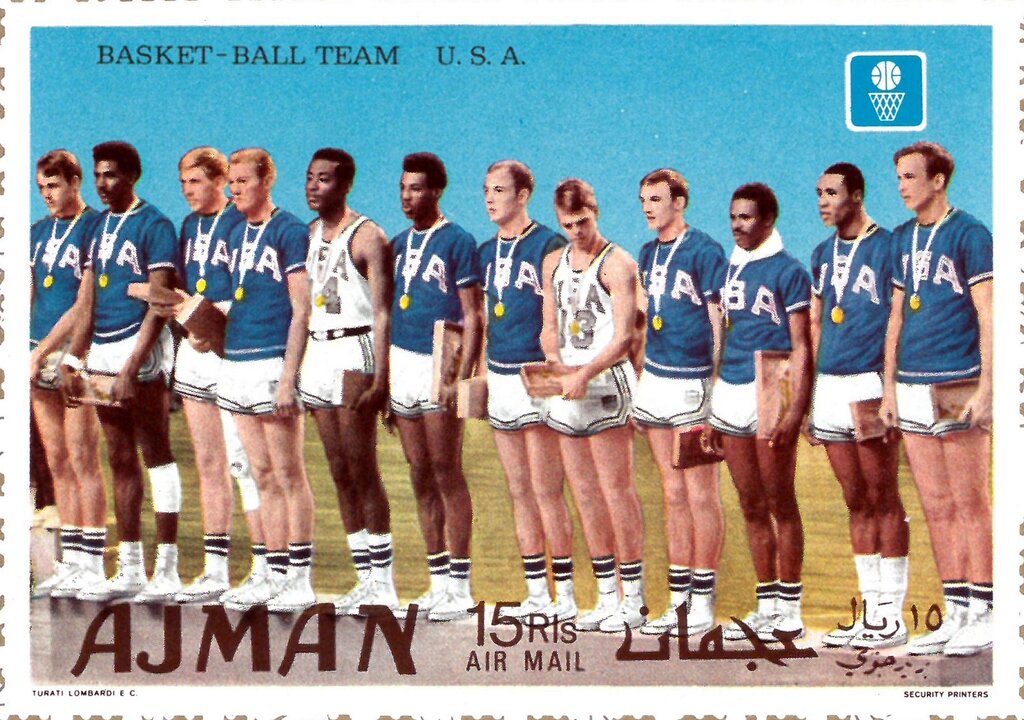
The 1968 Summer Olympics in Mexico City marked the seventh time basketball was an official medal event. Games were held at the Palacio de los Deportes from October 13 to October 25. The United States claimed their seventh straight gold medal by defeating Yugoslavia, while the Soviet Union took bronze over Brazil. The Americans' streak of seven consecutive golds was later matched by the U.S. women's team at the 2020 Olympics (held in 2021) and broken in 2024.
The host nation and the top five finishers from the previous Olympics received automatic berths. Additional spots came from FIBA continental tournaments and two extra qualifying events, each awarding two places.
The tournament used two groups of eight teams. The top two from each group advanced to a knockout round for medals. Third and fourth place teams competed for fifth through eighth place in a separate bracket. Fifth through eighth place teams from each group played for ninth through sixteenth place in another bracket.
In the preliminary round, the United States and the Soviet Union both went undefeated to top their groups. The knockout stage saw Yugoslavia upset the Soviet Union 63–62 in the semifinals, delaying the anticipated U.S.-Soviet final until 1972. In the gold medal game, the United States led 32–29 at halftime, then broke the game open with a 22–3 run to start the second half.
- Event
- Basketball at the 1968 Summer Olympics
- Location
- Palacio de los Deportes, Mexico City, Mexico
- Dates
- October 13 to October 25, 1968
- Gold Medalist
- United States
- Silver Medalist
- Yugoslavia
- Bronze Medalist
- Soviet Union
- American Gold Streak
- Seventh consecutive gold medal
Lore & Background
The 1968 tournament featured two groups of eight teams, with the top two from each group advancing to a knockout round for medals. Both group leaders, the United States and the Soviet Union, advanced undefeated to the knockout stage. However, the much anticipated final between the United States and the Soviet Union would have to wait four years, as Yugoslavia stunned the Soviets 63–62 in the semifinals.
Reader's Guide
In the championship game, the Americans had a slim 32-29 lead at intermission but put the game out of reach with a 22-3 streak to start the second half, defeating Yugoslavia for the gold. The Soviet Union earned the bronze against Brazil. The Americans' record of seven basketball gold medals in a row was matched by their women's team in 2021 when they won the 2020 Olympics, and then broken in 2024. This tournament marked the seventh appearance of basketball as an official Olympic medal event and solidified the United States' dominance in the sport during that era.
Did You Know?
- The United States defeated Yugoslavia to win their seventh consecutive gold medal in basketball.
- Yugoslavia stunned the Soviet Union 63–62 in the semifinals, preventing a U.S.-Soviet final.
- The Americans' record of seven consecutive gold medals was matched by the U.S. women's team in 2021 and broken in 2024.
- The tournament took place at the Palacio de los Deportes in Mexico City from October 13 to October 25, 1968.
The Unbroken American Run
Between 1936 and 1968, the United States men's basketball team accomplished what no other nation has matched in Olympic history: seven consecutive gold medals without surrendering a single game. This unbroken streak, spanning four Olympic Games, cemented American supremacy in a sport they had helped shape. The 1968 Munich Games marked the final chapter of this era, as the U.S. claimed its seventh straight title. Under the amateur rules of the period, the Americans could not field players from the professional National Basketball Association. Instead, they turned to college athletes, while rival nations dispatched their finest players who qualified as amateurs under FIBA's classification, often earning modest allowances rather than full wages. Over the broader span of Olympic basketball, the United States men's teams have captured 17 of the 20 tournaments in which they participated, a record of dominance that no other country, living or dissolved, has come close to matching. The 1968 victory thus stood as the apex of an era defined by total American control of the Olympic basketball court.
From Springfield to the Olympic Court
Basketball's journey to the Olympic stage began in 1891, when James Naismith devised the game in Springfield, Massachusetts. Within a few decades, the sport had spread well beyond American borders, a process in which the Young Men's Christian Association played a particularly significant role in carrying the game to numerous countries. The International Basketball Federation was established in Geneva, Switzerland, in 1932, laying the organizational groundwork for international competition. Before basketball earned its place as a full medal sport, it appeared as an unofficial demonstration event at the 1904 and 1924 Summer Olympics. The first true Olympic basketball tournament took place in Berlin in 1936, where a remarkable 21 teams competed on outdoor tennis courts. Dr. Naismith himself presented the medals to the top three finishers. The tournament moved indoors for the first time at the 1948 Games, marking a significant evolution in how the sport was staged at the highest level. By 1968, the event had become a well-established fixture of the Olympic program, with FIBA organizing both the qualifying tournaments and the Games themselves under IOC sanction.
The Amateur Dilemma and the Global Field
The competitive landscape of Olympic basketball through 1968 was shaped by a fundamental tension in the amateur rules. While the United States was prohibited from sending players from the professional National Basketball Association, rival nations operated under a different interpretation of FIBA's amateur classification. Players in several countries earned allowances rather than wages, allowing them to be considered amateur while effectively training full-time. This created an uneven playing field that would later intensify with the Eastern Bloc's state-sponsored athlete programs, where players were nominally listed in the military but paid by the government to train exclusively. In the 1936 Berlin tournament, Kansas Jayhawks coach Phog Allen helped organize the event, and the amateur requirement meant all competitors were non-professionals. The United States still dominated, but the structural inequality in how different nations could field their best talent was a persistent undercurrent. FIBA, which organizes both the FIBA World Olympic Qualifying Tournaments and the Olympic basketball tournaments sanctioned by the IOC, would eventually address this imbalance in 1989 by permitting NBA players to compete internationally.
The Streak Broken and the Sport Transformed
The 1968 Munich gold medal was the last of seven straight American titles, and the years that followed would reshape Olympic basketball entirely. In 1972, the Soviet Union ended the American winning streak with a controversial one-point victory over the United States in the gold medal game. Yugoslavia then claimed the runner-up spot in 1976, and in 1980, with the Americans boycotting, Yugoslavia became the third nation to win the Olympic title after defeating the Soviets in the semifinals and Italy in the final. The Soviet Union captured gold again in 1988. The landscape shifted dramatically in April 1989 when FIBA approved allowing NBA players in international competition. The 1992 Dream Team won gold with an average margin of 44 points per game without calling a single timeout. Women's basketball debuted in 1976, with the Soviet Union winning the inaugural title. In 2017, the IOC announced that 3x3 basketball would join the Olympic program starting at the 2020 Tokyo Games, further expanding the sport's Olympic footprint.
Gallery
More in Basketball at the Summer Olympics 1-24
Spotted an error? Know more?
This is a living reference — every entry is fact-audited, and reader corrections feed straight into our audit queue. Suggest an edit · See this site's audit record