
Basketball at the 1960 Summer Olympics
16 nations competed in Rome for Olympic basketball gold.

Wikipedia / Wikimedia Commons
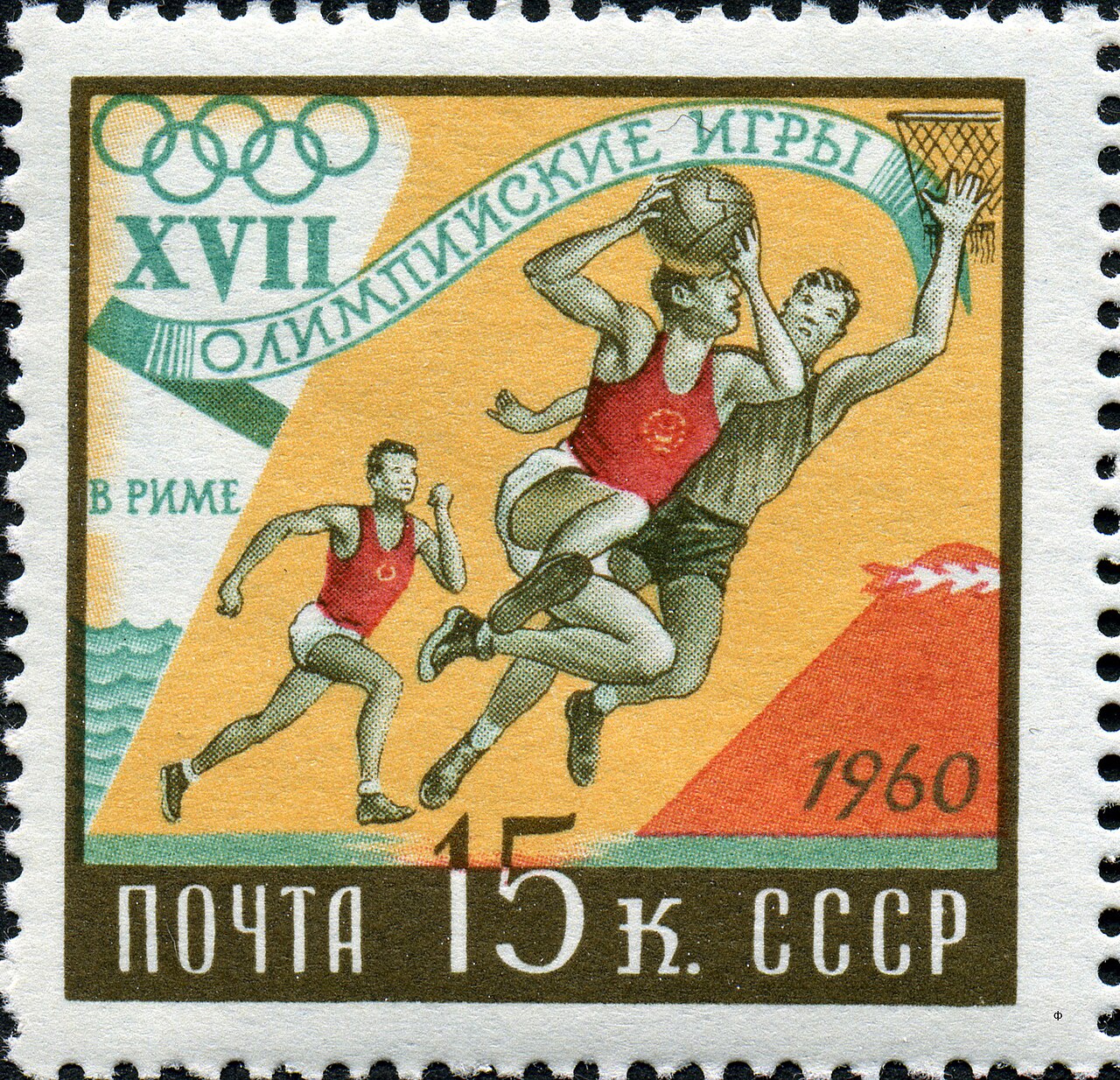
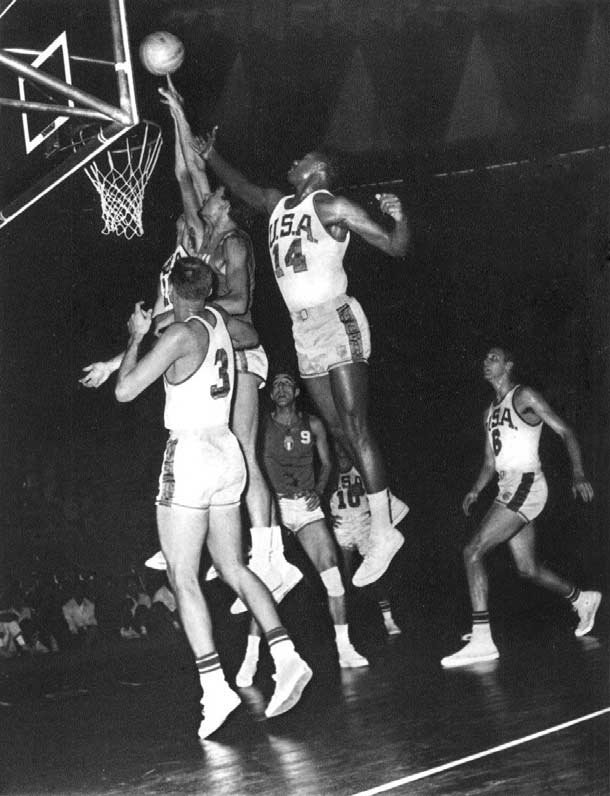
Basketball at the 1960 Summer Olympics was the fifth appearance of the sport as an official Olympic medal event. The tournament featured 16 nations, with many others eliminated in a pre-Olympic tournament held from 13 to 20 August 1960 at the Land Rover Arena in Bologna. A total of 64 games were played at the Palazzetto dello Sport and PalaLottomatica in Rome.
- edition
- 5th official Olympic basketball tournament
- dates
- 13–20 August 1960 (pre-Olympic); tournament held during 1960 Summer Olympics
- venue
- Palazzetto dello Sport and PalaLottomatica, Rome
- nations
- 16
- games_played
- 64
- pre_olympic_qualifier_teams
- Czechoslovakia, Spain, Hungary, Yugoslavia, Poland
Lore & Background
The tournament began with a preliminary round splitting the 16 teams into four groups. Each team played every other team in its group once. The top two teams from each group advanced to the semifinals in two pools of four, while the lower two teams entered a consolation semifinal for 9th through 16th place. In the semifinal pools, teams played every other team in their pool, none of which they had faced previously. The top two teams from each semifinal moved to the final round, and the lower two played for 5th through 8th place. The consolation semifinal worked similarly, with top teams competing for 9th through 12th and lower teams for 13th through 16th.
Reader's Guide
The 1960 Olympic basketball tournament introduced a complex multi-stage format that carried over results from the semifinals into the final round. The United States' win over the Soviet Union and Brazil's victory over Italy carried over into the medal round. The final round consisted of a pool where each team played the two finalists they had not yet faced in the semifinals; preliminary round results were not carried over. This structure influenced later Olympic basketball formats. The pre-Olympic qualifier, held at the Land Rover Arena in Bologna, admitted five teams: Czechoslovakia, Spain, Hungary, Yugoslavia, and Poland. The tournament remains notable for its 64 games played across two Rome venues.
Did You Know?
- The pre-Olympic qualifier was held from 13 to 20 August 1960 at the Land Rover Arena in Bologna.
- 64 games of basketball were played in the Olympic tournament.
- Spain's victory over Japan carried over into the classification for 13th–16th place.
- The United States' win over the Soviet Union carried over into the medal round.
The American Dynasty at Its Peak
The 1960 Summer Olympics basketball tournament marked the fifth consecutive gold medal for the United States, part of a remarkable seven-title streak spanning 1936 through 1968. What elevated this run beyond simple repetition was the fact that the American squad did not lose a single game across all seven Olympic tournaments. By 1960, basketball had been a consistent medal sport at the Summer Games for 24 years, and the United States had claimed every title in between. The competing American roster was composed of college players, as the rules of the era barred any athlete from the professional National Basketball Association. Despite that restriction, the Americans dominated each tournament with an authority that left little room for suspense. The broader statistical record underscores the scale of the achievement: the United States men's teams have won 17 of the 20 Olympic tournaments in which they have participated, a level of sustained excellence unmatched by any other nation in the sport's history.
The Amateur Code and Its Uneven Playing Field
The 1960 tournament operated under a strict amateur framework that shaped competition in ways both principled and uneven. The United States, prohibited from fielding players from the professional NBA, sent its finest collegiate athletes to represent the country. Players from other nations could compete provided FIBA classified them as amateurs, meaning they received allowances rather than wages. This distinction created a subtle asymmetry: while American players balanced basketball with academic obligations, competitors from other countries could devote more time to the sport within the letter of the rules. The International Basketball Federation, established in Geneva in 1932, organized the Olympic basketball tournament and enforced these eligibility standards under the broader sanction of the International Olympic Committee. The amateur code governing the 1960 Games would eventually be challenged by the rise of state-sponsored full-time athletes from Eastern Bloc nations, a structural shift FIBA would not formally address until 1989.
From Outdoor Courts to a Mature Olympic Sport
When basketball first appeared at the Olympic Games in 1936, the tournament was staged on outdoor tennis courts in Berlin, a setting far removed from the dedicated indoor arenas hosting the sport by 1960. The transition to an indoor venue occurred at the 1948 Games, and by the 1960 tournament the sport had settled into a more permanent and polished presentation. The origins of this Olympic journey trace back to 1891, when James Naismith invented the game in Springfield, Massachusetts. Within a few decades, the sport spread well beyond American borders, aided significantly by the Young Men's Christian Association, which helped introduce basketball to numerous countries. The International Basketball Federation, organized in 1932, formalized the sport's international governance. Before earning full medal status, basketball had appeared as an unofficial demonstration event in 1904 and 1924. The 1960 Games thus represented a mature phase of a sport that had evolved rapidly from its modest origins into a cornerstone of the Olympic program.
A Singular Champion and the Road Ahead
At the 1960 Summer Olympics, the United States stood as the sole nation to have ever won the Olympic basketball title. No other country had yet broken through the American monopoly on the gold medal, a record that would persist until the Soviet Union's controversial one-point victory over the United States in 1972. The 1960 tournament thus existed in a competitive landscape where the outcome was, in many respects, a foregone conclusion, with the real drama lying in the manner of American dominance rather than the question of whether they would prevail. This singular supremacy set the stage for the sport's later diversification. After the Soviet triumph of 1972, the competitive field gradually broadened: Yugoslavia claimed gold in 1980 during the American boycott, and Argentina eventually became the fourth nation to win the title in 2004. Today, the United States remains the defending champion in both men's and women's basketball, while Argentina stands as the only other existing nation to have captured either Olympic basketball gold.
Governance and the Architecture of Olympic Basketball
The 1960 basketball tournament was one link in a chain of institutional structures that gave the sport its Olympic form. The International Basketball Federation, organized in 1932 in Geneva, Switzerland, assumed responsibility for organizing both the men's and women's FIBA World Olympic Qualifying Tournaments as well as the Summer Olympics basketball tournaments themselves. These competitions operate under the sanction of the International Olympic Committee, which ultimately governs the inclusion of sports in the Olympic program. Basketball's path to the Olympics was not immediate: the sport appeared as an unofficial demonstration event in 1904 and again in 1924 before earning consistent medal status beginning with the 1936 Berlin Games, where 21 teams competed in the first full tournament. The Young Men's Christian Association played a significant role in spreading the game internationally, creating the global participant base that made a multi-nation Olympic competition feasible. By 1960, this governance architecture had matured into a stable system that would continue to shape the sport's Olympic identity for decades to come.
Gallery
More in Basketball at the Summer Olympics 1-24
Spotted an error? Know more?
This is a living reference — every entry is fact-audited, and reader corrections feed straight into our audit queue. Suggest an edit · See this site's audit record